
2025 A Year of Transformation, Challenge, and Pragmatic Hope
2025 A Year of Transformation, Challenge, and Pragmatic Hope explores change, resilience, and realistic optimism shaping decisions and growth

Technology Best Practices
·
March 12, 2021
What if valuable resources are right under our noses, and we don't recognise them for what they are! This may be more common than we realise...
What if valuable resources are right under our noses, and we don't recognise them for what they are! This may be more common than we realise.
To use a simple example, I went to the post office a few days ago and it occurred to me that I use their service every day of the week. Yet I'd never posted a review despite outstanding service. Also, the value exceeds what I pay (in my opinion). After looking at the online reviews, I realised half the reviews were negative and immediately posted a review. The staff are helpful and reliable, and deliver a critical service.
This is analogous of life.
We are surrounded by people, organisations, and things that we value too little or too much.
Examples of people and things that are valuable by under-served/under-supported:
But do we give them adequate attention and support? Can we invest in their improvement, or even simply give more attention?
Below are 4 simple steps you can take to maximise the value you gain from people, organisations and things around you and your organisation.
On a page, draw two axes - the vertical axis for how much the capability is *valued* and the horizontal axis for how much the capability is *used*.
Identify the people, capabilities, and organisations; and position them on the page. As a prompt, look at the following grid to identify extra capabilities.
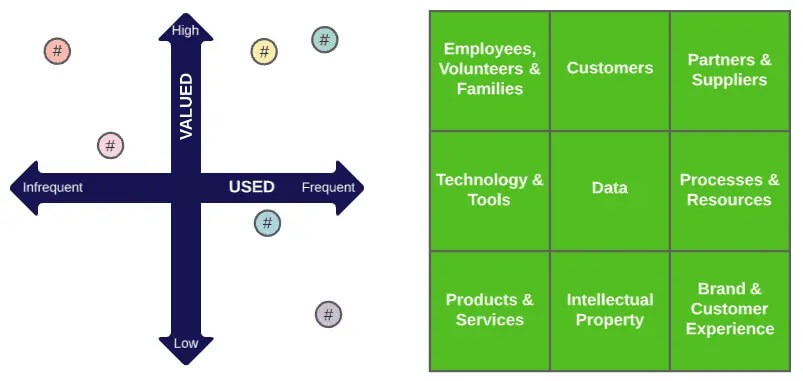
Now change the vertical axis to "Valuable" (rather than "Valued") and estimate how valuable you believe the capability to truly be. Now make a note of where it should be placed on the axes and consider where the greatest gaps are.
Often people place too much or too little value on something. This can be based on their level of familiarity with the subject, how visible the capability is, what other people think, current industry trends, and how much they are personally impacted by it.
An example is a business processes that is critical to the business and is executed every week. There's one staff member that is expert in it, and few other people understand it. As a result, the staff member is limited to a handful of immature spreadsheets/systems, and it's difficult to backfill them. If this process stopped, there would be big problems.
Another example is a proprietary process/system that is underutilised but very unique. This could provide a great opportunity.
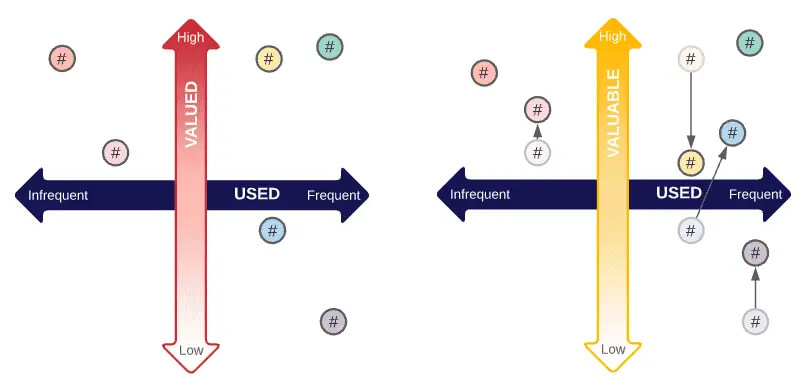
The next step is to prioritise a few capabilities that you believe to be worth investing in. There may be some areas that will require a small amount of attention/investment to deliver value, while others may require significantly more attention. It's a good idea to identify a spread for consideration.
So that you can engage others in the journey, it's a good idea to involving other people in these steps. There will be several people that understand the thinking from the outset, and you will all be able to influence others and gain buy-in.
This step is a subject for another post, and influencing others will reap rewards.
Let the Emergent team support your journey.
Reach out to us for a conversation.
2025 A Year of Transformation, Challenge, and Pragmatic Hope explores change, resilience, and realistic optimism shaping decisions and growth

Explore why Australian productivity fails and uncover the key factors affecting efficiency, growth, and workplace performance today.

Learn to avoid common pitfalls with The Resourcing Trap and discover strategies to optimize resources and achieve better results.